Best Camping Stoves: A Buyer's Guide to Every Type
Two-burner propane, backpacking canister, wood-burning or solar? Here's how each camping stove type cooks, what fuel it needs, and which one fits the way you camp.
Updated November 27, 2026 · 3 min read
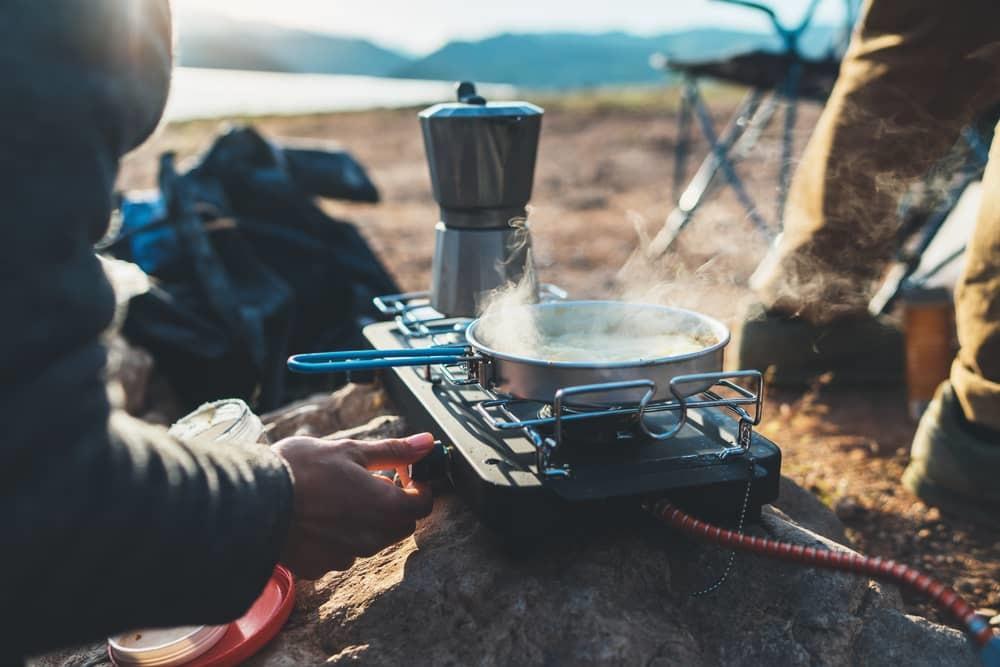
Cooking is half the fun of camping, and the stove decides what's on the menu. A backpacker boiling water for a freeze-dried meal needs something completely different from a family making pancakes for six. Here's how the main types compare.
Camping stove types
| Type | Fuel | Best for | Watch for |
|---|---|---|---|
| Two-burner tabletop | Propane (1 lb canisters or bulk tank) | Car camping, groups | Size and weight |
| Single-burner butane | Butane canisters | Small groups, picnics | Weak in the cold |
| High-output freestanding | Propane | Big groups, large pots | Bulk |
| Backpacking canister | Isobutane-propane | Hiking, solo trips | Small pots only |
| Integrated system | Isobutane-propane | Fast boiling, windy spots | Mostly a boiler, not a skillet |
| Wood-burning | Twigs and sticks | Ultralight, emergency backup | Fire bans |
| Solar cooker | Sunshine | Sunny base camps | Slow and weather-dependent |
Two-burner propane stoves
This is the classic car-camping stove. Coleman's tabletop stoves are everywhere, and Camp Chef (Everest and Explorer), GSI Outdoors and Jetboil (Genesis) make popular higher-end versions.
What to look for
- Burner output and simmer control. High output boils water fast, but simmering without scorching matters more for real cooking.
- Wind protection. Side wind panels make a big difference outdoors.
- Burner spacing. Can you fit a 10-inch pan and a pot at the same time?
- Ignition. Push-button ignition is convenient, but keep a lighter as a backup.
An adapter hose lets you run most two-burner stoves from a refillable 20 lb tank, which is cheaper and reduces disposable canister waste.
Single-burner butane stoves
These are compact "suitcase" stoves like those from Gas One and Eureka. They're affordable and simmer well, but butane struggles below about 40°F (4°C), so they're better for summer.
Freestanding and high-output stoves
Camp Chef Explorer-style stoves stand on legs and can handle stockpots and large griddles. They're great for group camps, hunting camps and tailgates.
Backpacking canister stoves
Tiny stoves that screw onto an isobutane-propane canister, from brands like MSR, Jetboil, Snow Peak and Kovea. They boil water quickly, weigh very little and fit inside your pot.
Integrated systems
Jetboil-style stoves combine a burner, a heat-exchanger pot and a windscreen. They're very fuel-efficient for boiling water, but less suited to frying or simmering.
Wood-burning stoves
Stoves like the Solo Stove Campfire burn twigs and use a double wall to create a cleaner, hotter fire. You never run out of fuel in a forest, but they're often prohibited during fire restrictions. Always check local rules.
Solar cookers
Solar ovens like the GoSun Cooker use reflectors to cook food slowly with no fuel at all. They're fun and efficient for a sunny base camp, but not something to rely on for a hot dinner after a cloudy day.
How to choose
- Count your campers. For one or two people a single burner works; for three or more, go for two burners.
- Decide how you'll cook. Mostly boiling water? An integrated system. Real meals? A two-burner with good simmer control.
- Think about the temperature. Propane works in the cold, while butane does not.
- Consider weight. If you carry your kitchen on your back, go for a canister stove.
Stove safety
- Cook outside the tent. Stoves produce carbon monoxide.
- Set the stove on a stable, level surface away from tent walls and dry grass.
- Check hose and canister connections for leaks with soapy water.
- Let canisters cool before packing, and recycle empties where your local program accepts them.
Planning meals? Our weekend camping checklist includes a simple two-night menu.
Campers Republic may earn a commission when you buy through links on this site, at no extra cost to you. Learn more.